Friends of the Pleistocene Seminar Series
Glacier driven evolution in Aotearoa New Zealand plants and animals with Nic Lawrence
Glaciers are traditionally seen as destructive forces for biology, with ice sheets having eliminated biodiversity across extensive regions of the globe. These impacts are clearly demonstrated by genetic analyses which show reduced diversity in affected regions. By contrast, intriguing new evidence from temperate glaciated mountains suggests quite the opposite may be the case in these ecosystems. In particular, recent analyses from New Zealand, including those by our lab, imply glaciation may have been a key evolutionary force structuring biodiversity along the Southern Alps, with diversification in isolated refugia. In this talk, I will take you on a journey, showing how our labs latest research is adding new and exciting chapters to the biological heritage of Aotearoa’s living and extinct taonga species, and how they responded to the Pleistocene Ice Ages.
The Zoom link will be sent to all members of the Friends of the Pleistocene Special Interest Group.
The Zoom link is also available to all GSNZ members by contacting the Friends of the Pleistocene Special Interest Group convener ahead of the event (pleistocene@gsnz.org.nz).
You need to be a GSNZ member to enjoy this talk.
If you're not yet a GSNZ member you can join here.
GSNZ member but not a Friends of the Pleistocene SIG member? No problem! Just log into the GSNZ website (top right of this page), go to your membership profile, click the "Subscriptions" tab, click "Apply a Subscription" and select "SIG: Friends of the Pleistocene" from the drop-down list. You'll automatically be added to the Friends of the Pleistocene SIG mailing list to receive notifications about future talks and activities.
Membership of any of our SIG's is included with your membership.
About Nic
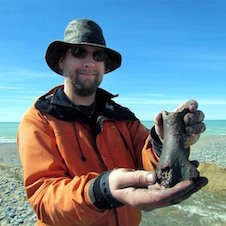
Dr Nic Rawlence is Director of the Otago Palaeogenenetics Lab in the Department of Zoology at the University of Otago and a Senior Lecturer in Ancient DNA. After gaining his PhD at the University of Adelaide in 2011 he moved to the University of Waikato before settling in Dunedin in 2013. Nic’s research focuses on reconstructing prehistoric ecosystems, how they have been impacted by humans and climate change, and what we can learn from this. He uses ancient DNA, palaeontology and archaeology to solve these natural mysteries, and enjoys communicating this research to the public, even busting a few myths now and then!